




O-Rings

General information
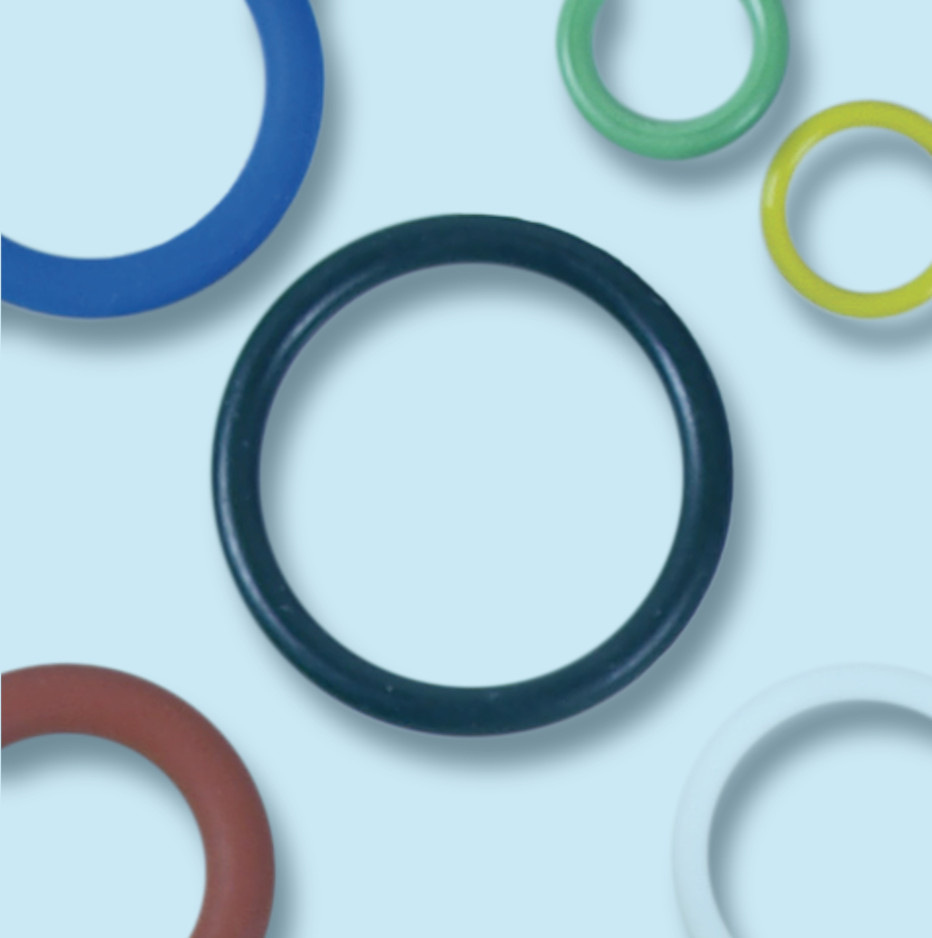
Due to its relatively simple design, the O-ring is easy to manufacture and available in numerous elastomer and plastic materials. O-rings are used in almost all areas, such as the automotive industry, pneumatics, hydraulics, the fittings industry, vacuum applications, plant engineering, and mechanical engineering.
In addition to a wide range of standard dimensions in metric and imperial measurements, Elapuls also supplies dimensions and special compounds manufactured to your individual requirements, e.g. with approvals in accordance with FDA 21 CFR 177.2600, USP Class VIm 3A Sanitary Standard NR. 18-03 Class II, EU 1935/2004, KTW, and many more.
We also manufacture O-rings in accordance with corporate standards, such as those of the automotive, pharmaceutical, and chemical industries. We offer O-rings made from all common elastomers and plastics, as well as special materials. Countless variations in material, hardness, colors, and dimensions are available.
In order to permanently improve sliding properties in dynamic applications or to facilitate mechanical or manual assembly, we also offer special surface treatments. These include, for example, coatings with PTFE, siliconization, talcum powder coating, molybdenum coating, and much more.
How it works
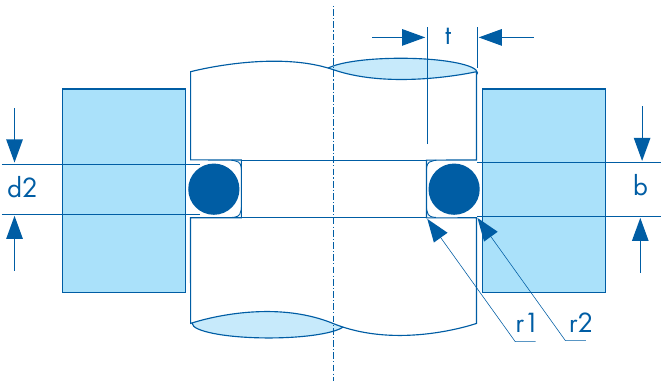
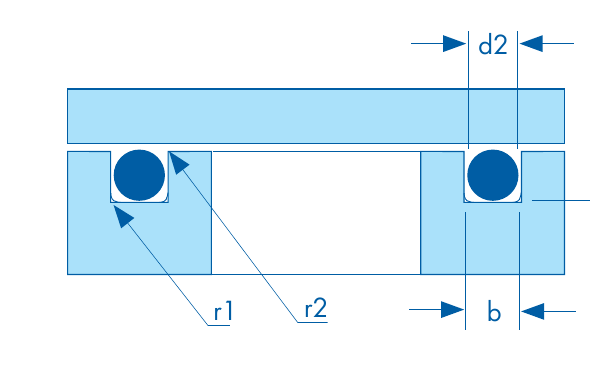
The sealing effect of O-rings is initially achieved by the deformation of the cross-section in the installation space and is further enhanced by the system pressure acting on the seal. In order to achieve the best sealing effect, the largest possible cord thickness should be selected based on the design. The hardness of the material depends on the system pressure, the type of application (dynamic or static), the gap dimensions, and the surface quality of the parts to be sealed.
Assembly
To avoid damaging the O-ring during installation, please note that
- assembly tools must not have any sharp edges and must be made of the softest possible material.
- the installation spaces are free of burrs and contamination
- the O-rings are not stretched beyond their elastic limit
- the O-rings are not rolled into the groove over the mounting surface to prevent twisting.
- transitions between slopes and radii are manufactured without transitions.
Installation Spaces
In installation spaces, burrs, notches, and scratches as well as contamination from dust, dirt, chips, metal residues, etc. must be avoided. In addition to the correct choice of material, the correct design of the installation space is also necessary for reliable sealing. The groove width and depth depend on the cord thickness of the O-ring.