



Shaft Seals

General information
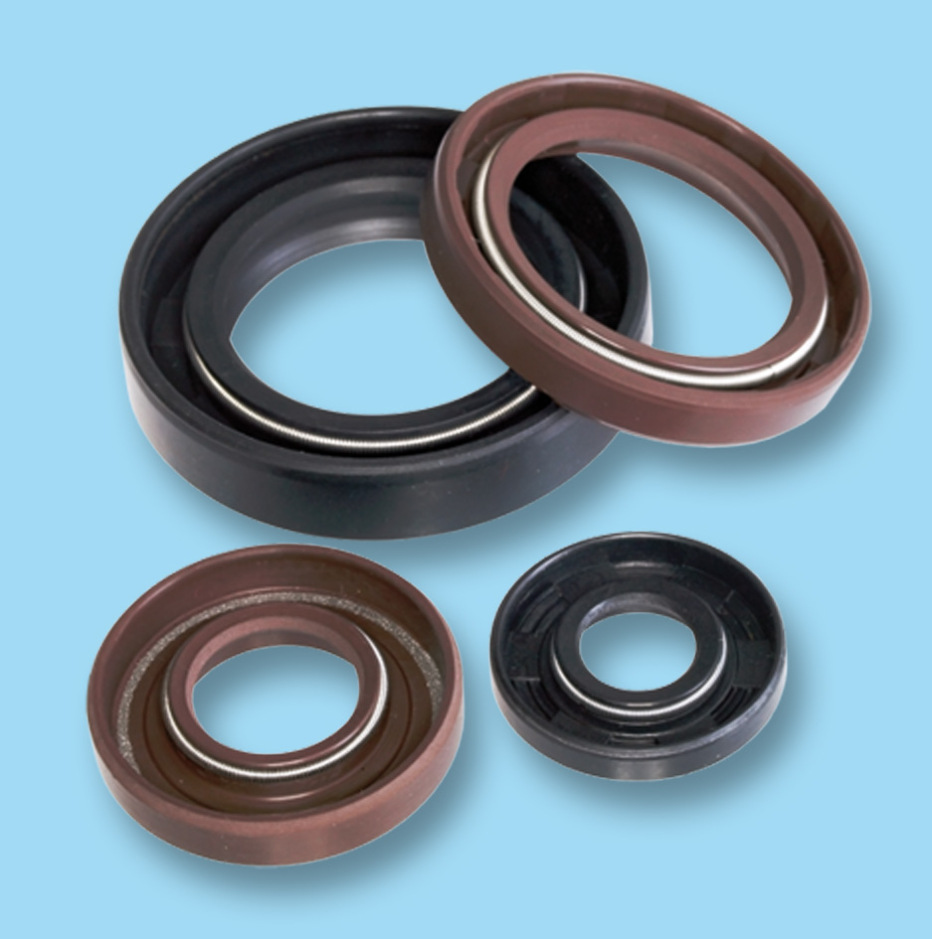
These complex seals are mostly used to seal rotating shafts. They consist of a metal ring that is completely or partially coated with a vulcanized elastomer. The coating merges into the sealing lip.
The most common materials are NBR and FKM. Special designs can also be equipped with a PTFE sealing lip.
We are happy to offer other materials on request.
Characteristics
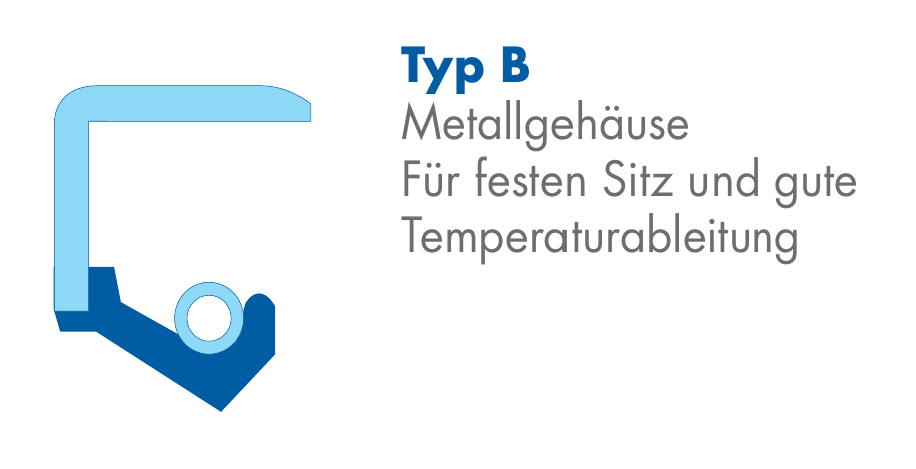
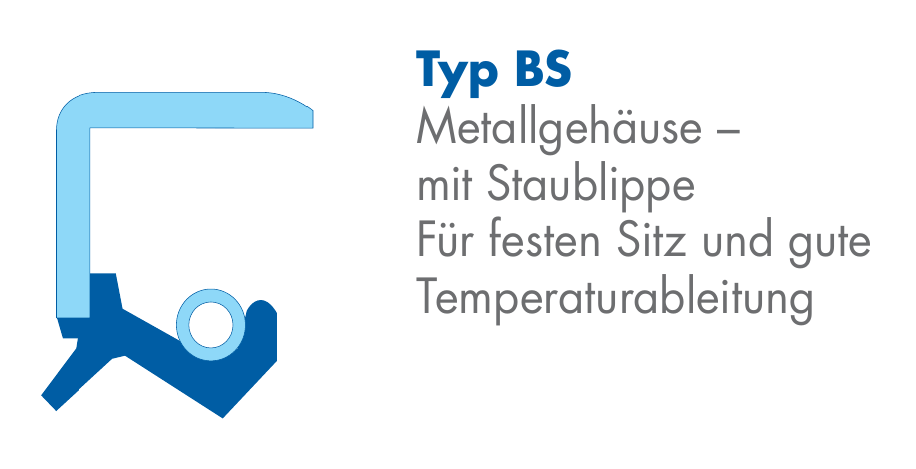
Thanks to the integrated reinforcement ring, radial shaft seals offer particularly high inherent stability. Fully coated types offer better secondary sealing and lower tolerance sensitivity in the installation spaces. In contrast, uncoated metal bodies ensure better heat dissipation when required.
The correct choice of material and design, in addition to the surface quality of the mating surface, ensures perfect sealing function and long service life of the sealing ring.
Further features
- Wide range of sizes and shapes
- Good wear resistance, low friction
- Easy-to-manufacture installation spaces
- High rotational speeds of up to 38 m/s possible
- Also available with stainless steel ring and spring
How it works
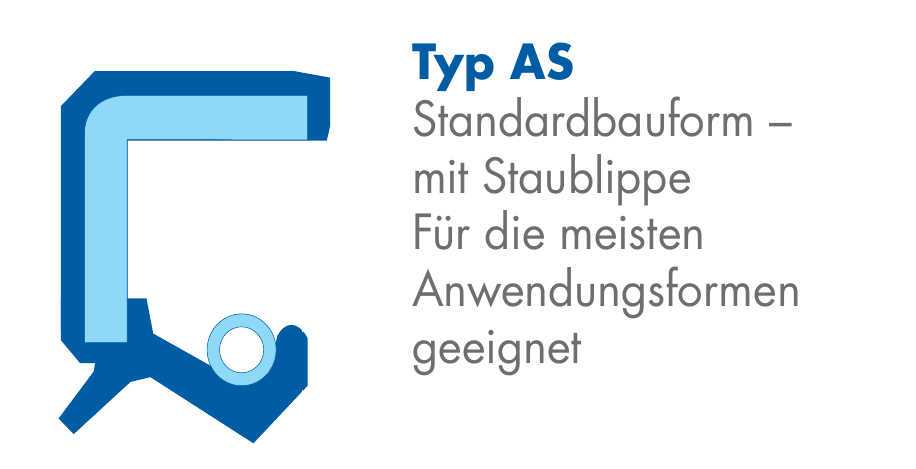
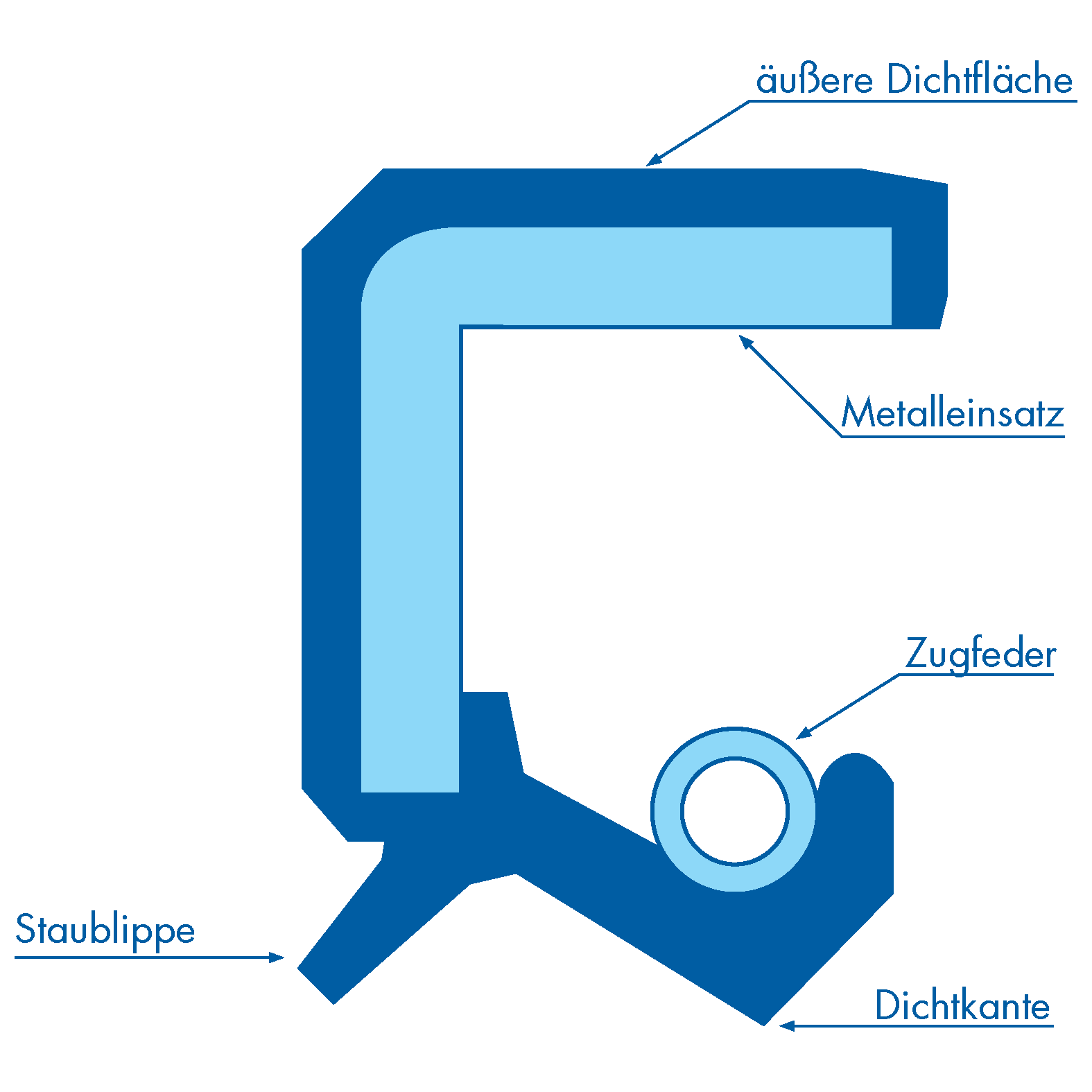
The radial shaft seal is installed in the housing with a tight fit. The sealing lip rests on the rotating seal. The contact pressure of the lip is usually reinforced by the built-in tension spring and kept constant. However, designs without springs are also available. Due to the fixed sealing lip and the rotating shaft inside it, high demands are placed on the surface quality of the shaft. To protect the sealing surface from contamination, radial shaft seals with an additional dust lip can be used.
Schematic representation Example Type AS:
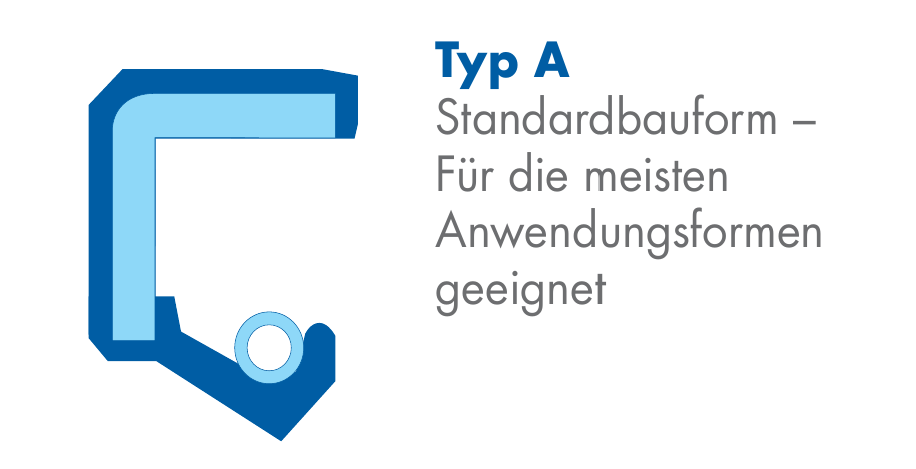
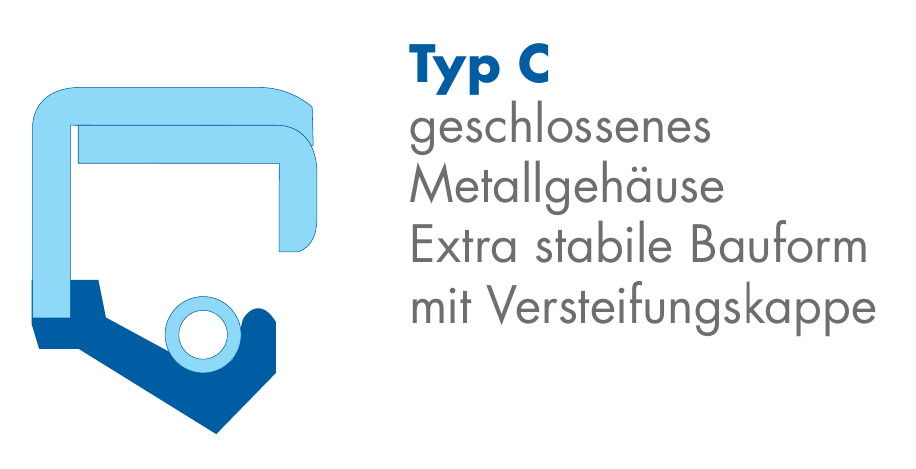
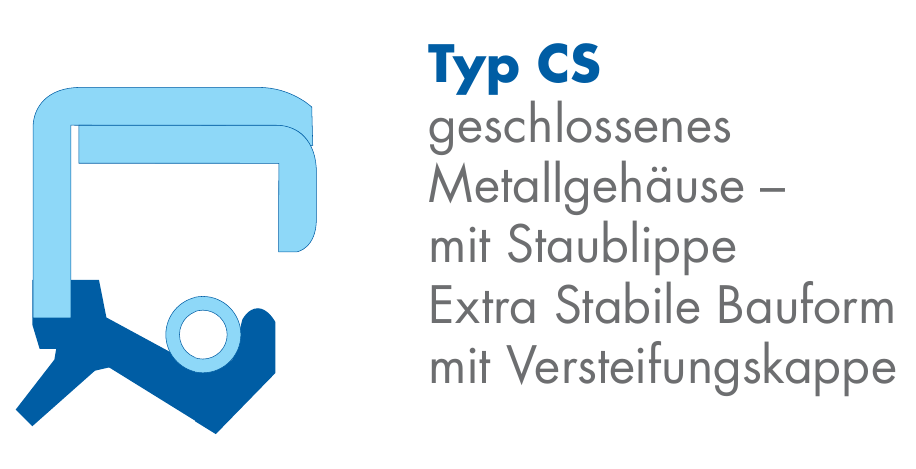
Standard types
Below you will find an overview of the most common types of radial shaft seals.
Numerous other designs, e.g. with fully encased metal core, with grooved outer sealing surface for better compensation of temperature-dependent expansion, etc., are available on request.